THE PRACTICE
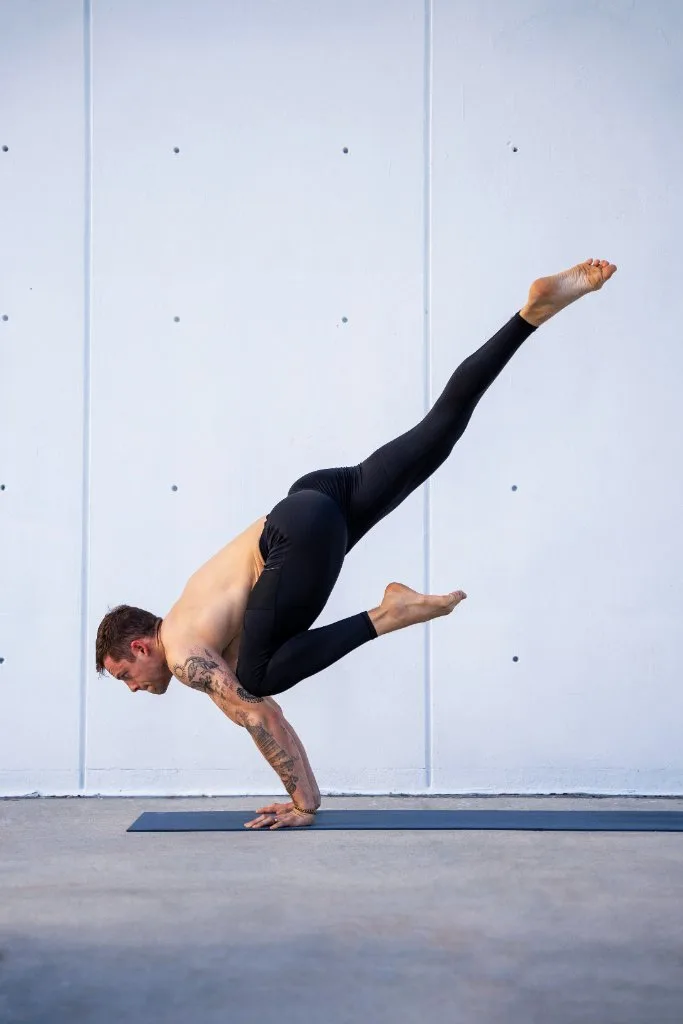
Ashtanga is a deeply rooted yoga practice, traditionally taught through paramparā: the direct transmission of knowledge from teacher to student. Tracing its roots to Mysore, India (at least some version of the roots), it links breath with movement (vinyāsa) in a series of postures, in the best case creating a powerful meditation in motion, and in the worst, still offering some benefit from jumping around on a yoga mat, breathing through your nose, and facing some degree of challenge. It is a practice steeped in and made fruitful through, as my late teacher, Guruji R. Sharath Jois, would say, the four D's: discipline, devotion, determination, and dedication.
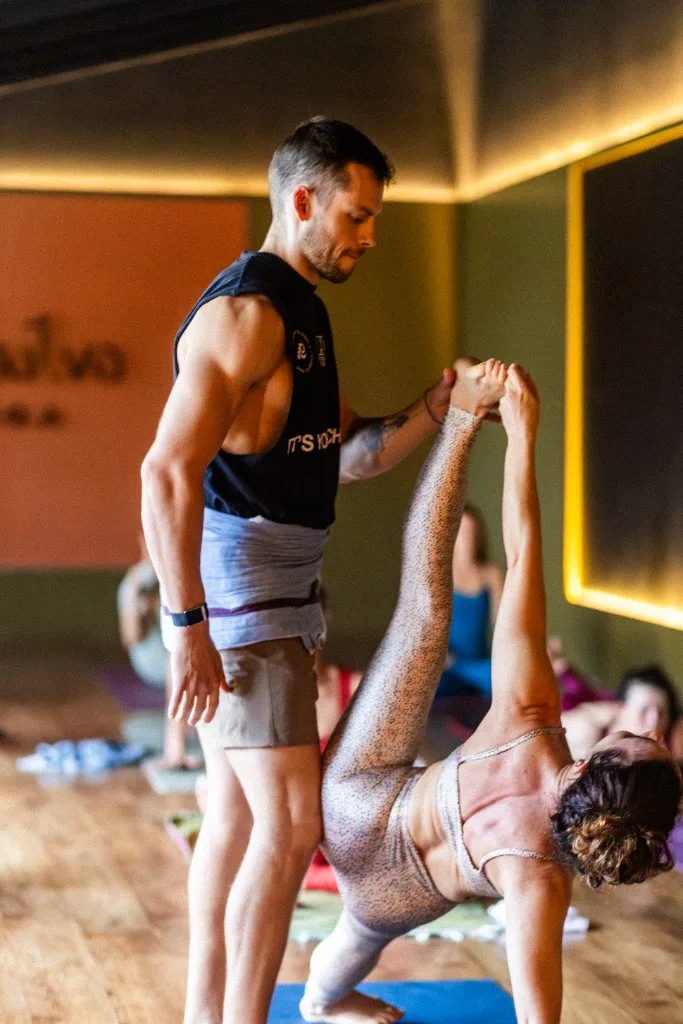
Most of it happens Mysore style, a reference to the place in India where most Ashtanga teachers and students can trace their lineage. In that setting each student is guided individually, so a single "class" can hold the full range of practitioners at once: the most physically adept in one corner, and in another, someone walking in for the very first time. Seen from the outside, Ashtanga can look linear, hyperfocused on progressing through asanas that arrive in a set sequence. But I would challenge any practitioner to describe their inner experience as anything like that. It strongly emphasizes returning to the mat with consistency and dedication, facing whatever arises. What looks the same on the outside is, no doubt, vastly different day over day on the inside.
Through this discipline and regularity, the practice becomes a mirror, reflecting back to us the highs and lows of life and everything in between. I see it as a sort of scaffolding: something to help us dream, grow, feel, and be safe in the process. But like scaffolding, it is only a tool, meant to be torn down, meant to support the journey, not to be the destination. I invite you to explore this practice and all that may unfold from raising your hands above your head, inhaling to the count of ekam
अथ योगानुशासनम्
atha yogānuśāsanam
Now, yoga begins